How to Charge Your Smartphone Properly to Make the Battery Last Longer: Myths, Mistakes, and Useful Tips
Is it true that you should always discharge your phone to 0%? Can you leave your smartphone charging overnight? Does fast charging really reduce battery lifespan?
There are many myths surrounding smartphone charging. Many of them date back to the era of older mobile phones and are still shared as “useful advice,” even though modern iPhones and Android smartphones work very differently.
In reality, battery longevity depends much more on your everyday charging habits than on whether you use fast or wireless charging. Proper daily use helps preserve battery capacity for longer and prevents premature battery wear.
In this article, we'll explain how modern batteries work, which popular charging tips are now outdated, and what really helps extend your smartphone battery's lifespan.
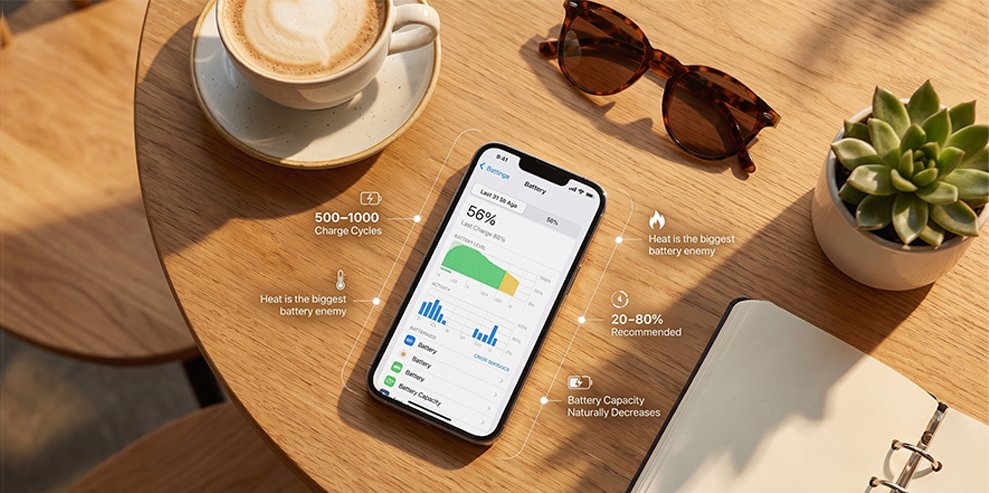
Why a Smartphone Battery Loses Capacity Over Time
Every modern smartphone uses a lithium-ion or lithium-polymer battery. These batteries offer high energy density, recharge quickly, and are designed for long-term use. However, they do not last forever.
On average, a modern battery is designed for approximately 500–1,000 full charge cycles. A charging cycle does not necessarily mean charging from 0% to 100%. For example, if you use 50% of the battery today and another 50% tomorrow, that also counts as one complete charging cycle.
After many charging cycles, the battery's maximum capacity gradually decreases. This is a completely natural process that affects every smartphone regardless of the manufacturer.
The main factors that accelerate battery wear include:
- regular smartphone overheating;
- keeping the battery fully discharged for long periods;
- low-quality chargers without proper protection;
- unstable power supply;
- physical damage.
Interestingly, overheating has a much greater impact on battery health than fast charging itself. That is why you should avoid charging your smartphone under direct sunlight, on a car dashboard during hot weather, or under a pillow where heat cannot dissipate properly.
The Most Common Smartphone Charging Myths
Myth #1. You Should Always Discharge Your Phone to 0%
False. This recommendation was relevant many years ago for older battery technologies. Modern lithium-ion batteries perform better when the charge level stays roughly between 20% and 80%. Regularly draining the battery to 0% places additional stress on it.
Myth #2. You Should Never Leave Your Smartphone Charging Overnight
Partially false. Modern smartphones automatically stop active charging once the battery reaches 100%, and many devices use optimized charging features. However, it is still important to prevent overheating during overnight charging and to use a high-quality charging adapter.
Myth #3. Fast Charging Quickly Damages the Battery
False. If your smartphone supports fast charging and you use a charger that complies with modern standards, the device automatically regulates voltage and current. The charging process remains safe for the battery.
Myth #4. Wireless Charging Damages the Battery
False. High-quality wireless charging stations that support Qi or MagSafe include temperature and power management systems. When compatible accessories are used, wireless charging is just as safe as wired charging.
Myth #5. Non-Original Chargers Are Always Dangerous
Not necessarily. The real issue is not whether the charger is original, but whether it is well-made and certified. High-quality chargers from trusted manufacturers support technologies such as Power Delivery, PPS, or Quick Charge and provide safe smartphone charging.
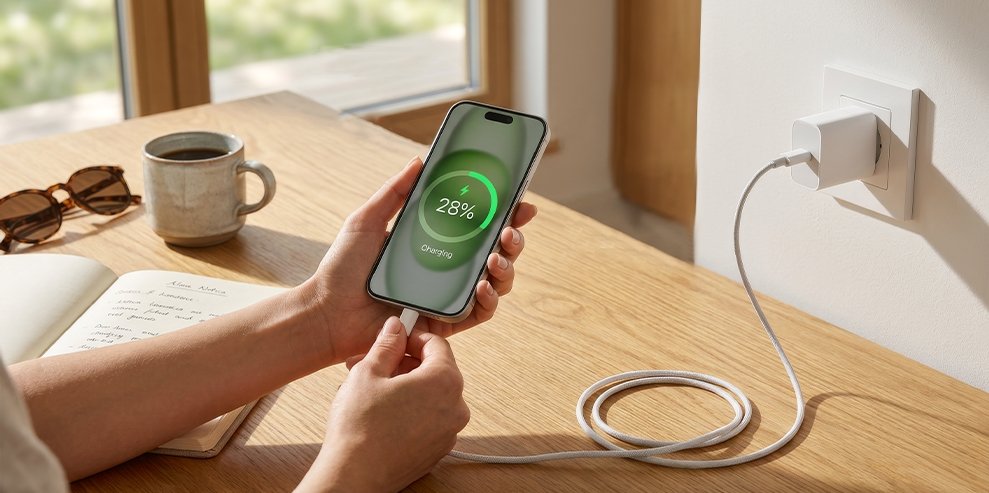
How to Charge Your Smartphone Properly: Practical Tips
In reality, extending your smartphone battery's lifespan is much easier than many people think. You don't need to follow complicated rules or constantly monitor every percentage of battery charge. A few simple habits are enough to help your battery stay in good condition for much longer.
Start Charging a Little Earlier
Don't wait until your battery drops to 1–2% every time. It is better to plug your smartphone in when the battery level reaches around 20–30%. This reduces stress on lithium-ion batteries and helps preserve their long-term capacity.
Avoid Overheating Your Smartphone
High temperatures are one of the biggest enemies of modern batteries. Avoid charging your phone under direct sunlight, on a car dashboard during hot summer days, or under a pillow. In these situations, heat cannot dissipate properly, accelerating the natural aging of the battery.
Use High-Quality Cables and Chargers
Even the most advanced smartphone cannot charge safely with an outdated or poor-quality charger. The charging adapter and cable are responsible for stable power delivery, fast charging support, and protection against voltage fluctuations.
Charge Your Smartphone Properly While Traveling
When traveling, commuting, or spending a busy day away from home, access to a power outlet is not always available. In such situations, it is better to use a modern power bank than to wait until your battery is completely drained. Short charging sessions throughout the day are perfectly safe for modern batteries and help you stay connected wherever you are.
Does Fast and Wireless Charging Damage the Battery?
Many people still worry about fast charging, even though today's charging technologies work very differently from those used just a few years ago. Modern smartphones and chargers constantly communicate with each other to determine the safest charging mode.
Power Delivery
Power Delivery (PD) automatically detects the optimal charging power for your smartphone. As a result, your phone receives exactly the amount of energy it can safely handle at any given moment.
PPS
Programmable Power Supply (PPS) makes fast charging even more precise. It continuously adjusts voltage and current, helping reduce heat generation while charging.
GaN
Gallium Nitride (GaN) technology is used in modern next-generation chargers. These chargers are more compact, more efficient, and generate less heat even when delivering high charging power.
Wireless Charging
Modern wireless charging is also safe for your smartphone. The device itself controls the charging process, while high-quality wireless chargers include protection against overheating and overvoltage. When using certified accessories, wireless charging does not reduce battery lifespan.
For people who travel frequently or spend a lot of time on the move, a MagSafe PowerBank is especially convenient. It allows you to charge your smartphone wirelessly without interrupting everyday use.
How to Choose a Modern Charger
If you are planning to buy a new charger, do not focus only on charging power. It is much more important to choose a device that supports modern charging technologies responsible for speed, safety, and everyday convenience.
A quality charging adapter should support Power Delivery, PPS, or Quick Charge, feature modern USB Type-C ports, and provide stable performance even while charging multiple devices simultaneously.
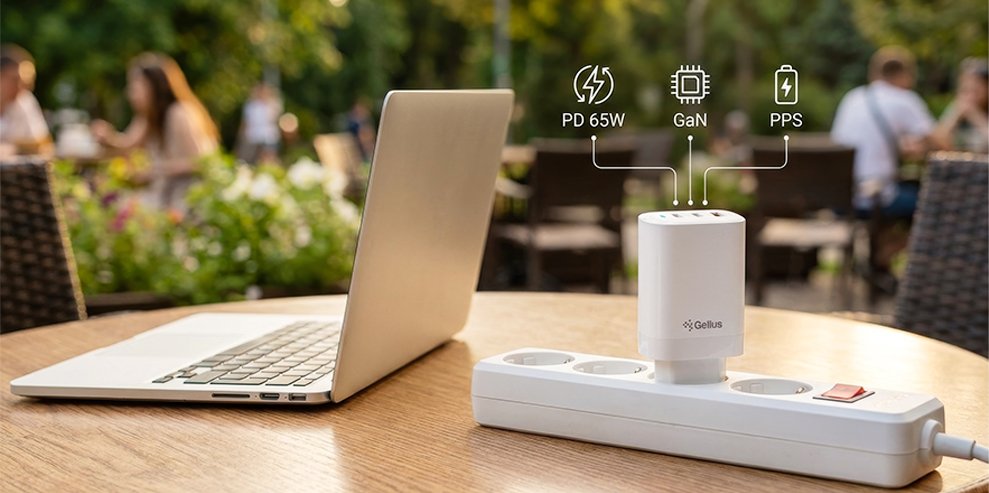
A great example is the Gelius Elevaro GP-HC065. Powered by GaN technology, it delivers up to 65 W, features one USB port and two USB Type-C ports, supports Power Delivery, PPS, and Quick Charge, and allows you to charge several devices at the same time. This makes it an excellent solution for home, the office, or traveling, where multiple gadgets often need charging simultaneously.
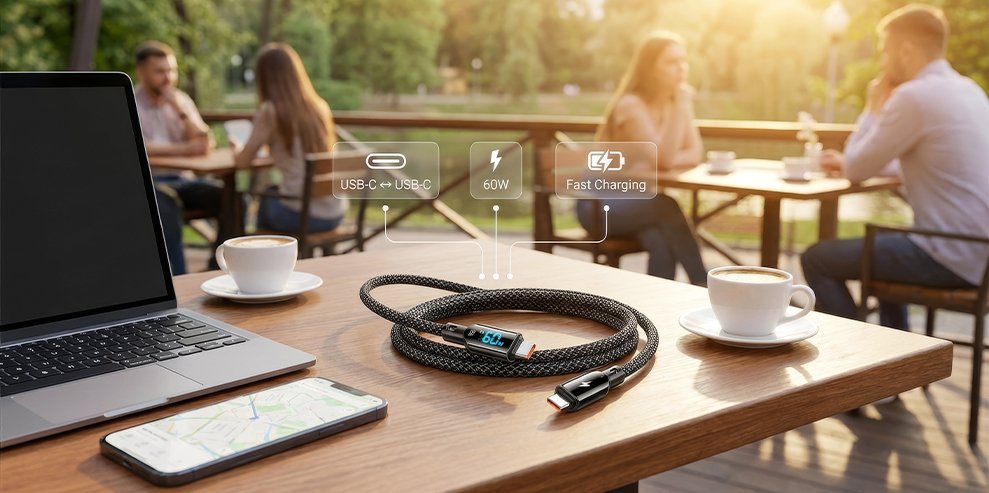
The charging cable is equally important. If it does not support the required charging power or is made from poor-quality materials, fast charging may not work properly. The Gelius Screen GP-UCN007 USB Type-C to USB Type-C cable supports charging up to 60 W, is 1.2 meters long, and features a durable design suitable for everyday use at home or on the go.

If you frequently spend time away from home, the Gelius Fluxen GP-PBW120 is worth considering. With support for Qi2, MagSafe, and wireless charging up to 15 W, it lets you charge your smartphone without using a cable. Its 10000 mAh battery capacity, magnetic attachment, and compact design make it ideal for travel, business trips, and everyday commuting.
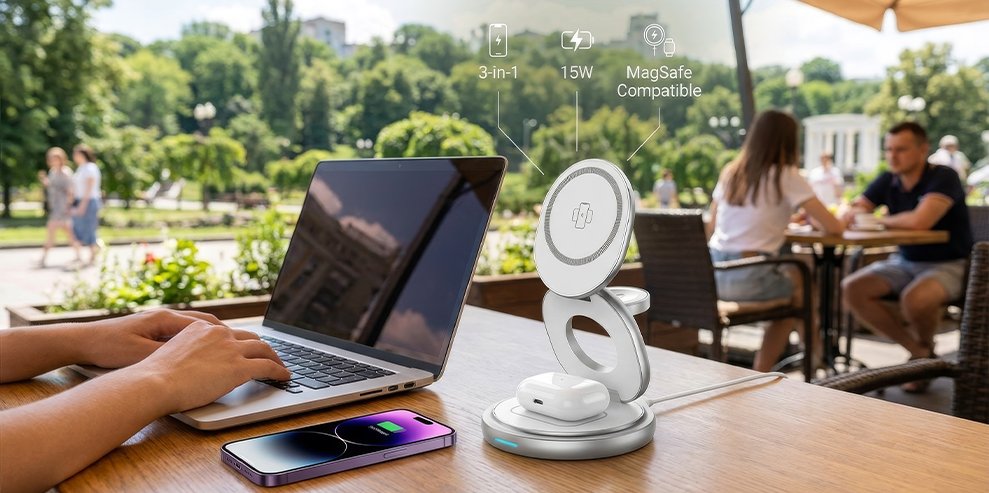
If you regularly use several devices throughout the day, the Gelius Foldy 3-in-1 wireless charging station is an excellent choice. It simultaneously charges your smartphone, wireless earbuds, and smartwatch, supports charging up to 15 W, features a foldable design, and takes up very little space on your desk or in your travel bag.
Checklist: How to Charge Your Smartphone Properly
Keeping your smartphone battery healthy for longer is easier than you might think. Simply follow these practical recommendations.
- ✅ Charge your smartphone when the battery level drops to around 20–30%.
- ✅ Avoid regularly draining the battery to 0%.
- ✅ Try not to overheat your smartphone while charging.
- ✅ Use high-quality charging adapters and cables.
- ✅ Choose chargers that support modern technologies such as Power Delivery, PPS, or Quick Charge.
- ✅ When traveling, use a reliable power bank that supports safe fast or wireless charging.
- ✅ If you use wireless charging, choose devices compatible with Qi, Qi2, or MagSafe.
These simple habits will help preserve your battery's health while making everyday smartphone charging faster, safer, and more convenient.
Conclusion
Many outdated charging myths are still widely believed, even though they no longer apply to today's smartphones. Modern lithium-ion batteries work differently, and most charging processes are automatically managed by the smartphone itself.
In reality, battery lifespan depends much more on your daily habits than on whether you use fast charging or wireless charging. Avoiding excessive heat, using high-quality accessories, and following simple charging practices can help keep your battery in excellent condition for much longer.
Modern technologies such as Power Delivery, PPS, GaN, Qi2, and MagSafe have made charging not only faster but also significantly safer. That is why choosing a quality charger with support for modern charging standards is just as important as choosing the right smartphone.
If you want charging to be as convenient as possible at home, in the office, or while traveling, modern accessories such as a powerful charging adapter, a high-quality USB Type-C cable, a wireless charging station, or a MagSafe PowerBank can make everyday smartphone use much more comfortable.