It Really Can Draw: Meet the New Gelius Robot for Little Artists
It Really Draws
There are cards on the table. The child looks through them, chooses an image, and shows it to the robot. The robot scans the card — and this is where the most interesting part begins.
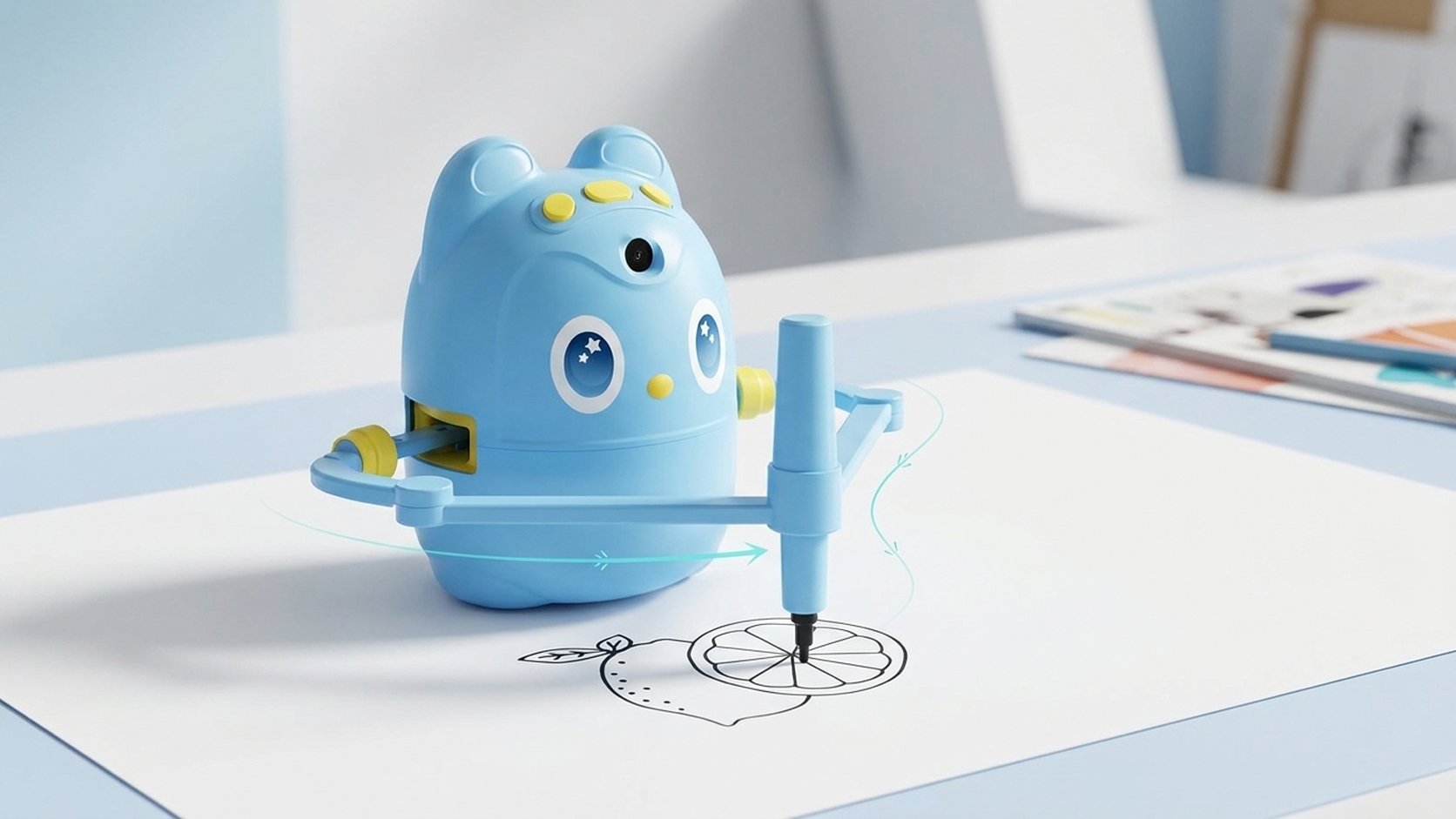
The mechanical arm starts moving. The marker touches the board. First one line appears, then another, new outlines are gradually added — and a drawing begins to take shape in front of the child.
Not on a display. Not in an app. The robot physically draws it with a marker.
This is exactly the scenario around which the Gelius Education Painting Robot intelligent educational robot for drawing and learning is built.
It has 150 scanning cards, an image recognition system, a 3-axis mechanical arm, markers, and a special drawing board. And no smartphone, tablet, or Wi-Fi is required for the creative process.
But the most interesting part does not begin when the robot finishes the drawing. The child can watch it being created line by line, repeat what they see, try drawing independently, and add colors.
So this is not simply a robot artist demonstrating a technological trick. It is an interactive format in which technology becomes part of creative play.
How Gelius Education Painting Robot Works
To understand the main feature of Gelius Education Painting Robot, there is no need to dive into complex technology. Everything begins with one simple action — choosing a card.
The child finds an image they want to see on the board and shows the card to the robot. It scans the card, recognizes the image, and then the mechanical arm gets to work.
The marker then begins moving across the board, reproducing the drawing step by step.
The entire process can be described like this:
card → scanning → recognition → mechanical arm → marker → drawing.
But for the child, the most important part is what happens between the beginning and the result. They do not simply see a finished image that suddenly appears in front of them — they see the sequence in which it is created.
One line leads into another. Shapes and outlines gradually appear. The drawing comes together before their eyes.
That is why a drawing robot can be more than just an interactive toy. The child can watch its movements and then try to reproduce what they have seen on their own.
This mechanism makes the drawing robot for children part of the creative process rather than simply a device that produces a finished result.
The Secret Is in the Mechanical Arm: How the Robot Creates a Drawing
The moment Gelius Education Painting Robot begins to draw looks unusual precisely because the result is created physically.
The robot is equipped with a 3-axis mechanical arm with precise positioning.
It controls the marker and allows the robot to smoothly reproduce images on the special drawing board.
It is important not to confuse this mechanism with other formats of interactive toys.
This is not an image on a screen. Not a projection. Not an animation.
The mechanical arm physically moves the marker, while the child watches the drawing gradually appear on the surface of the board.
This process creates the main wow factor of the new product. The technology does not remain hidden inside the body of the device — you can literally see it in motion.
The robot scans the card, recognizes the image, and then mechanically reproduces it. For a child, this turns ordinary drawing into interaction with a little robot artist.
150 Cards — What Will the Robot Draw Today?
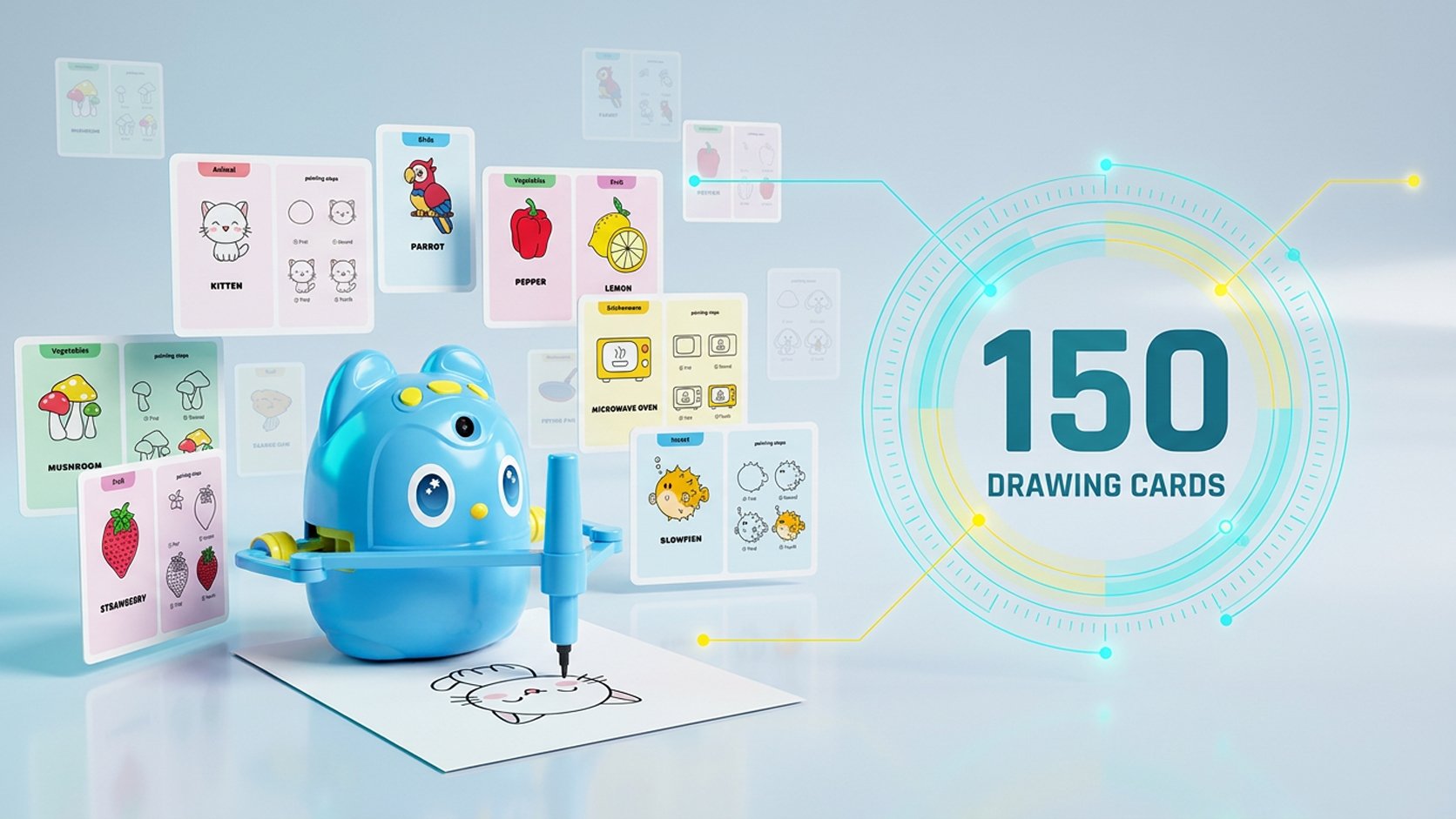
The same drawing would quickly stop being surprising. That is why Gelius Education Painting Robot comes with 150 unique scanning cards.
The available themes include:
- animals;
- fruits;
- vegetables;
- vehicles;
- other images.
But the number itself is not the most important part.
The large card set makes it possible to change the theme of creative activities. If the child is interested in animals today, they can work with that category. Next time they may want vehicles, so they can choose different cards. Another creative evening can focus on fruits or another available theme.
This gives the child the opportunity to decide for themselves what the robot will draw today.
The selection itself becomes part of the game: look through the cards, find an interesting image, show it to the robot, and watch as the idea turns into lines on the board.
Here, the 150 cards are not simply a large number in the package contents. They provide the foundation for different creative scenarios.
A Tech Toy That Doesn't Need a Smartphone
The word "intelligent" next to a modern gadget often means another screen, an app, registration, and a network connection.
Gelius Education Painting Robot follows a different logic.
Creative interaction with it does not require a smartphone, tablet, or Wi-Fi.
There is no need to download an app, create an account, hand the child a phone, or connect the toy to a network every time they want to start drawing.
All the main interaction happens physically.
Card → scanning → mechanical arm → marker → real drawing.
That is why Gelius Education Painting Robot is interesting as an interactive screen-free toy. The technology is still there — in fact, scanning and the mechanical system are fundamental to how the device works. The child simply does not need an additional display to interact with it.
This is not about positioning the product against smartphones or tablets. Those devices have their own use cases. What is interesting here is something different: this is a technological toy that works without a smartphone because its entire operating principle is built around a card, mechanical movement, and physical drawing.
The Robot Shows — the Child Tries
If the robot simply created pictures while the child only watched the finished result, the creative scenario would be fairly short.
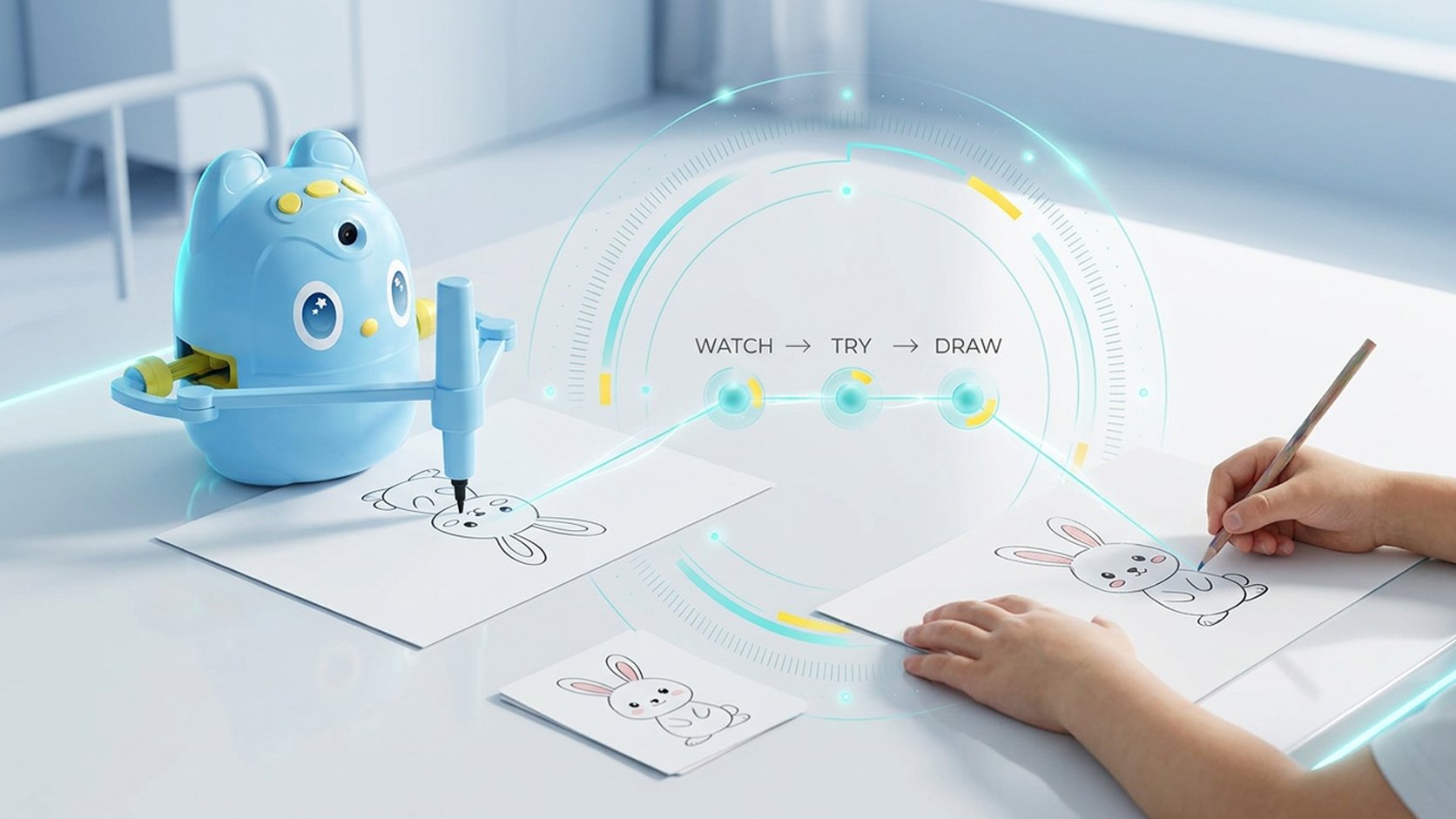
But what makes Gelius Education Painting Robot interesting is the opportunity to observe the process of creating the image.
The child sees which line the robot starts with. They follow the movement of the marker. They notice how separate lines and shapes gradually come together to form a complete drawing.
And then they can try to repeat what they have seen.
The interaction follows a natural sequence:
watch → repeat → try it yourself → color it in.
In this format, play is combined with creative practice. Drawing and working with markers can help train fine motor skills, coordination, attentiveness, and creative skills.
At the same time, the robot does not guarantee specific learning outcomes and should not be viewed as a device that will automatically teach a child to draw.
Its role is more interesting: to show the process and give the child an opportunity to take part in it independently.
From the First Line to Their Own Drawing
An important detail in the robot artist concept is that it should not take the creative process away from the child.
Yes, the mechanical arm can reproduce an image from a card. But the interaction does not have to end there.
At first, the child can simply watch the marker move. They can pay attention to which lines the image begins with and how those lines gradually form a shape.
The next step is to try repeating individual elements.
Later, the child can pick up a marker and try creating a familiar drawing by themselves.
In this way, the robot for learning to draw acts not as a replacement for the little artist but as an assistant in creative play.
The robot can show one way to build an image. Whether to repeat it, experiment, or move on to independent attempts is then up to the child.
This is also where the technological part gradually moves into the background. After the wow effect of watching the mechanical arm move, the main thing becomes the desire to pick up a marker and try.
The Outline Is Ready — Now Let's Add Colors
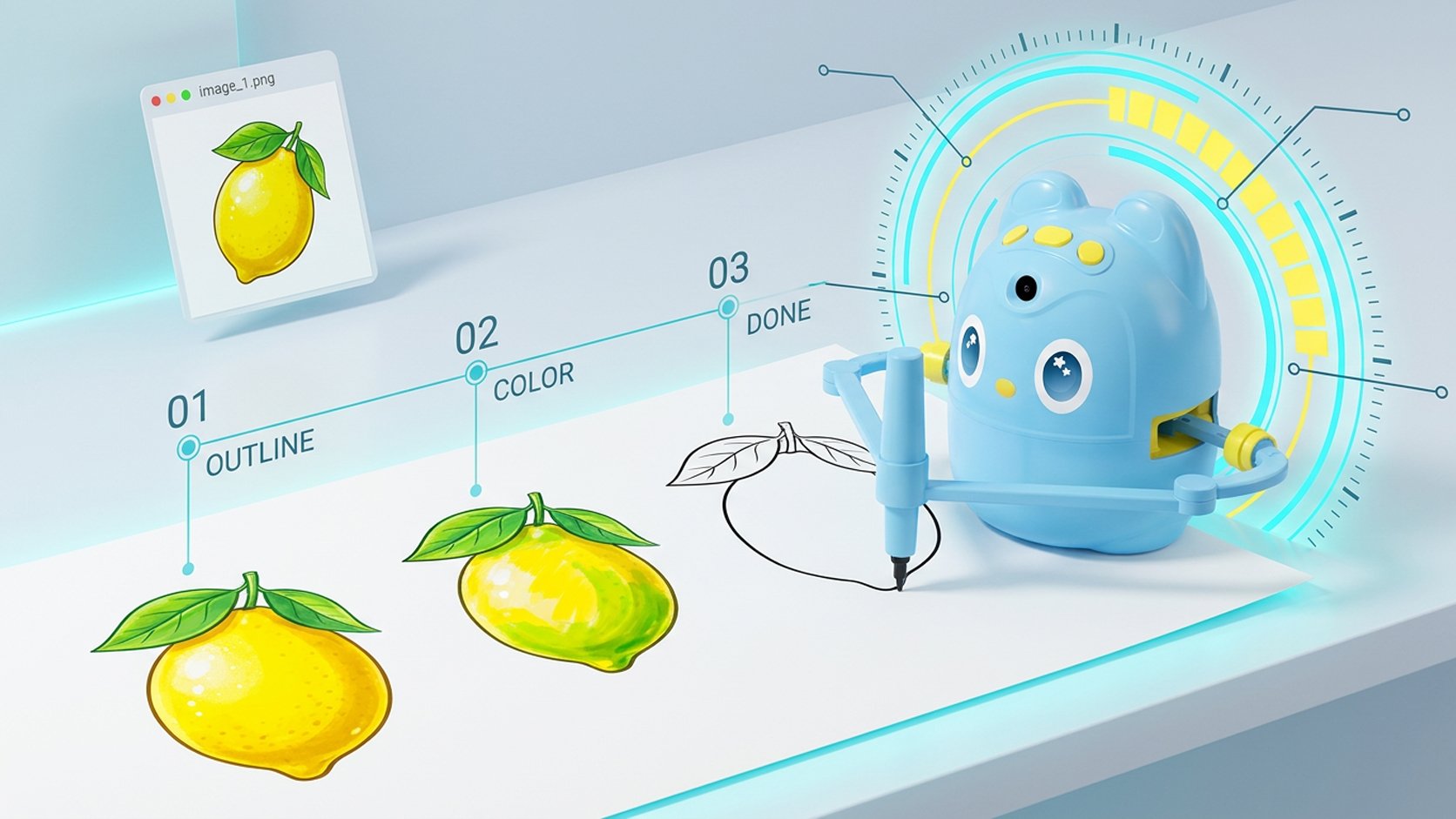
When the robot finishes the outline, the creative process does not necessarily end.
The set includes black outline markers and colored markers.
So after watching the mechanical arm create the base of the image, the child can move on to the next stage — coloring.
The outline is already there, but the choice of colors remains with the little artist.
This is where there is more room for personal vision: the child can choose colors and complete the result the way they want.
One scenario therefore flows naturally into another: first, the robot demonstrates the drawing process, and then the child continues the creative work independently.
What's Included with Gelius Education Painting Robot
Moving from getting to know the robot to actual creative play requires more than just the device and cards.
The Gelius Education Painting Robot set includes:
- the robot itself;
- 150 unique scanning cards;
- black outline markers;
- colored markers;
- a special drawing board.
The cards define the theme, the robot scans the selected image, the mechanical arm works with the marker, and the board becomes the surface on which the result appears.
After that, the colored markers can come into play for the child's own creative work.
In other words, the set supports the complete main scenario around which this drawing toy is built: from choosing an image to seeing it appear on the board and then coloring it in.
1500 mAh for Independent Creative Play
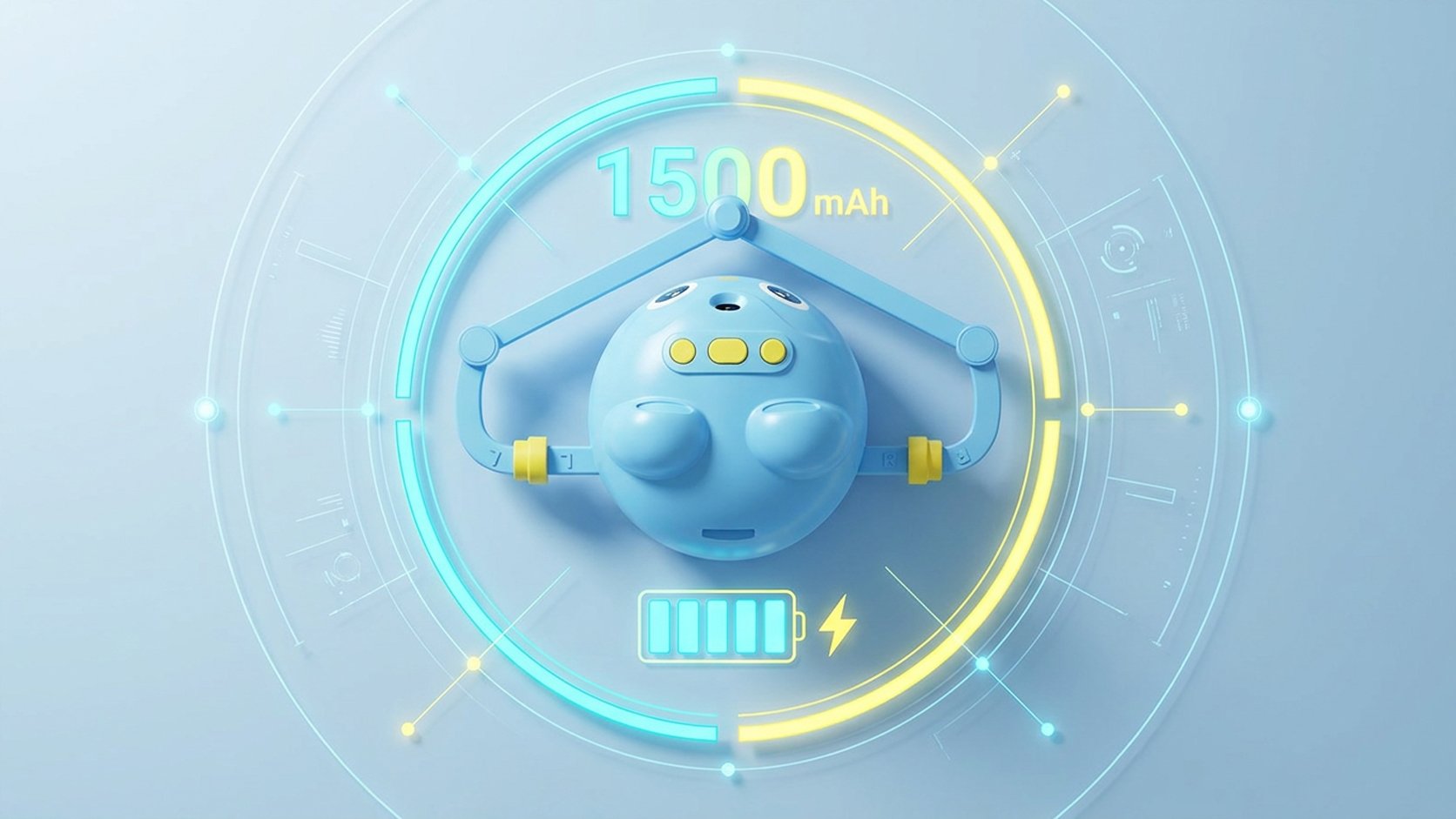
Gelius Education Painting Robot is equipped with its own 1500 mAh Li-pol battery.
Built-in power fits well with the overall concept of independent interaction with the device.
It does not require a constant connection to a smartphone, tablet, or Wi-Fi. The child interacts directly with the robot, cards, board, and markers.
At the same time, the 1500 mAh capacity should not be converted into a specific number of operating hours or days. There is no confirmed information about battery life in hours.
So what matters here is not an invented runtime figure, but the fact that the robot has its own battery and is designed for an independent creative play format.
A Compact Robot for a Child's Creative Space
The robot artist does not require a separate large workspace.
Gelius Education Painting Robot measures 115 × 110 × 146 mm and weighs 370 g.
Thanks to these dimensions, it can be placed on a child's table next to the drawing board, cards, and drawing materials.
The body is made of ABS plastic and silicone, and the model comes in blue.
In everyday use, it is a compact part of a child's creative space: place the robot on the table, prepare the board, choose a card — and drawing can begin.
At the same time, there is no need to attribute unsupported properties to the materials, such as absolute safety or 100% non-toxicity. The factual information about the construction and materials is sufficient.
Gelius Education Painting Robot for Children Aged 3 and Up
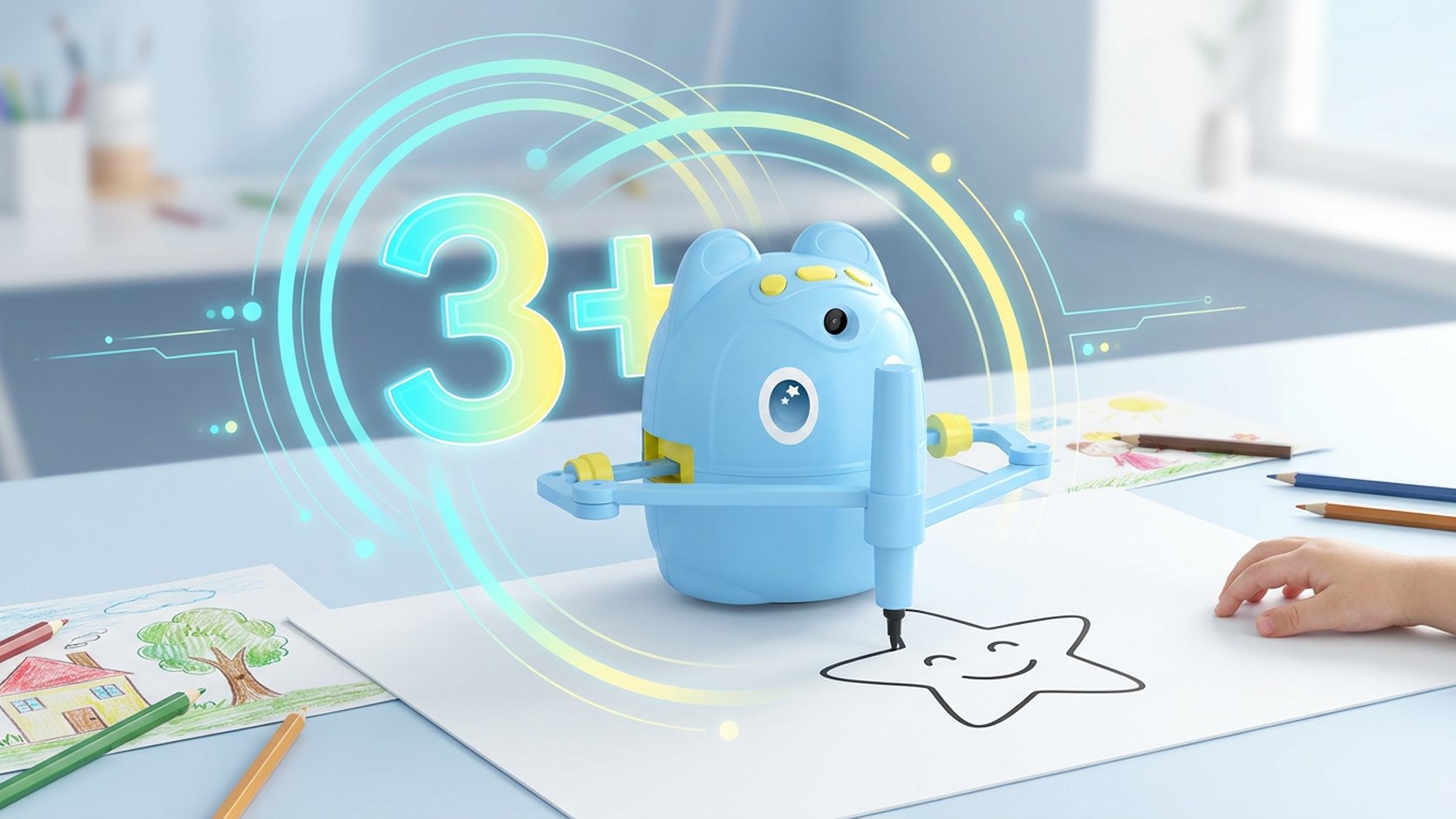
The recommended age for Gelius Education Painting Robot is 3+.
But the appeal of this educational toy for children does not have to be limited to one scenario.
The robot may interest a child who already enjoys drawing and wants to try a new format of creative play.
Another scenario is an early introduction to lines and shapes, where it is interesting to watch separate marker movements gradually turn into a recognizable image.
For children who are interested in robots and mechanisms, the operation of the 3-axis mechanical arm itself can become a separate part of the experience.
And for those who enjoy repeating, coloring, and creating things with their own hands, the robot offers another way to begin a creative activity.
At the same time, the 3+ age recommendation does not mean a promise that the device will definitely teach every child to draw. Interest, pace of interaction, and creative skills are always individual.
Gelius Education Painting Robot is better viewed as an educational toy for children that demonstrates the process and invites the child to try continuing it independently.
A Creative Evening with the Robot Artist
The easiest way to understand Gelius Education Painting Robot is not through a specifications table but by imagining an ordinary creative evening.
The robot appears on the table, with the drawing board, markers, and card set nearby.
The child starts looking through the images. There are many options, so the first step is deciding what they would like to draw today.
The card is chosen. The child shows it to the robot.
It scans the image, recognizes it — and the mechanical arm starts moving. The marker touches the board, and the first line appears. Then the second. Then another.
The child can simply watch, but it is much more interesting to follow the sequence: where the robot starts, where it moves the marker, and how a simple line becomes part of the future drawing.
The outline gradually becomes recognizable. The robot completes its part of the work.
Now the child can pick up the marker themselves.
They can try repeating individual lines. Draw a familiar shape. Or move on to the colored markers and color in the finished outline.
When the work is finished, the set of cards is still there. The child can choose the next image — and begin a new creative scenario.
This is how the device's specifications come together in one clear process: 150 cards provide the choice, the scanning system recognizes the image, the 3-axis mechanical arm controls the marker, and the child watches, repeats, and adds their own colors.
Why Gelius Education Painting Robot Is More Than Just a Robot That Draws
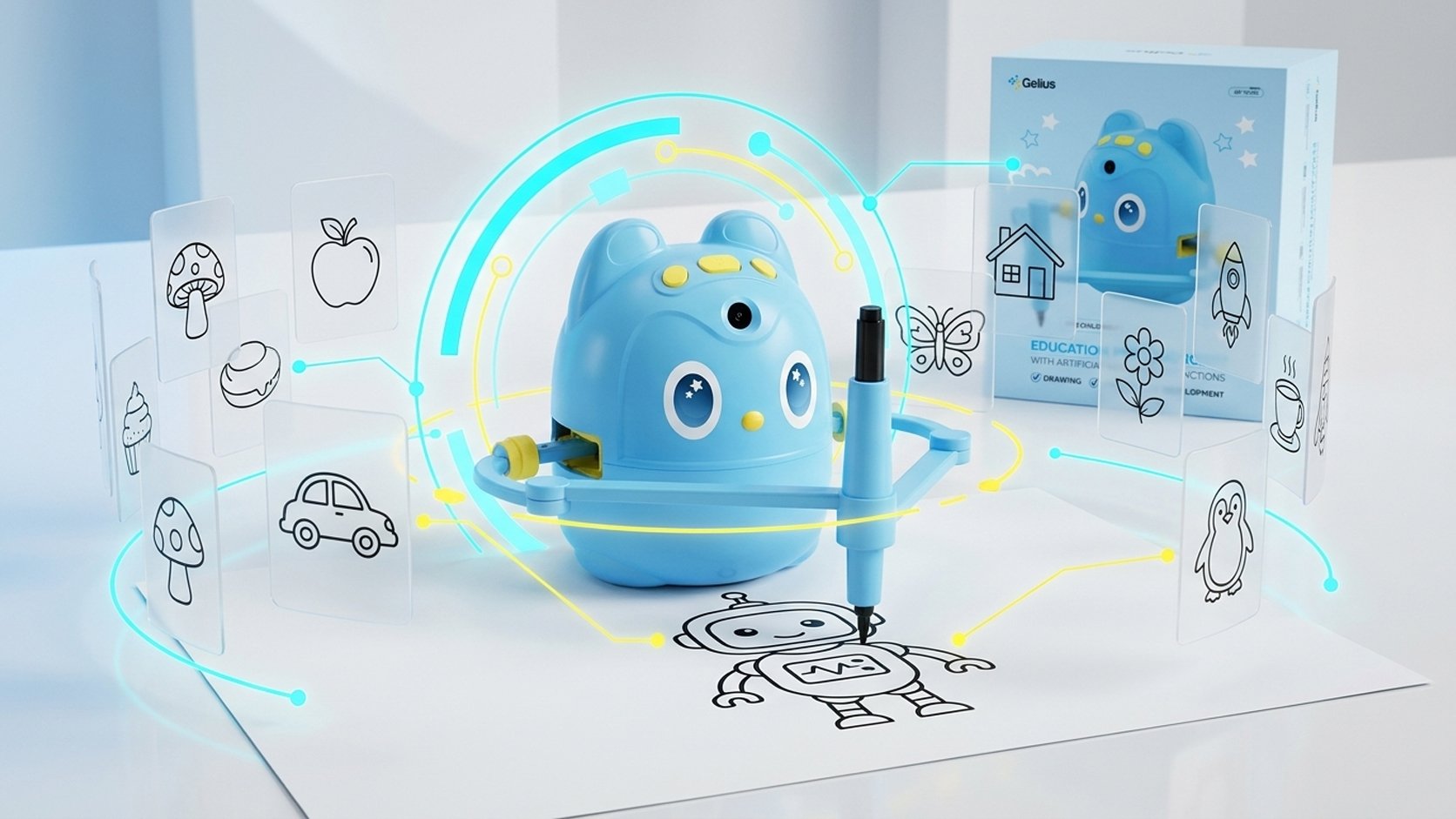
If you describe the new product in one sentence, it sounds quite simple: it is a robot that scans cards and draws images with a marker.
But the real meaning of the product is revealed through interaction.
It combines technology, physical interaction, learning through play, and children's creativity.
The technological part handles scanning and the operation of the mechanical arm. The physical part is the real marker, board, and lines appearing directly in front of the child. The learning scenario begins when the child follows the sequence of movements and tries to repeat them. And the creative part continues through independent attempts and coloring.
The result of this interaction is not a digital picture on a display.
It is a real drawing.
It can be colored in. The child can try to reproduce it. They can choose another card and start again with a new image.
And none of this requires a smartphone, tablet, or Wi-Fi.
This combination is what makes Gelius Education Painting Robot interesting as an educational robot for children: the technology does not perform the entire creative process instead of the child but demonstrates a process from which the child can begin their own attempt.
Which Line Will the Next Drawing Start With?
At first, everything looks like a technological trick: show the robot a card, it scans it — and the mechanical arm starts drawing.
But after a few minutes, the robot itself is no longer the main thing.
The process becomes the main thing.
The child sees how an image is born from individual lines. They can follow the movement of the marker. Try to repeat what they have seen. Add colors. And then independently choose what comes next.
150 cards provide different themes for creative activities. The 3-axis mechanical arm physically works with the marker. The special board becomes the place where the drawing appears. And because there is no need for a smartphone, tablet, or Wi-Fi, the interaction remains simple: a card, the robot, a marker, and the creative process.
Here, technology does not move creativity onto a screen. It picks up a marker and shows the child which line they can start with.
And what the next drawing will be is up to the little artist.